2026-09-16 · David Ellis
Spring Rodent Control: Why Your Attic Becomes a Target in Early Spring
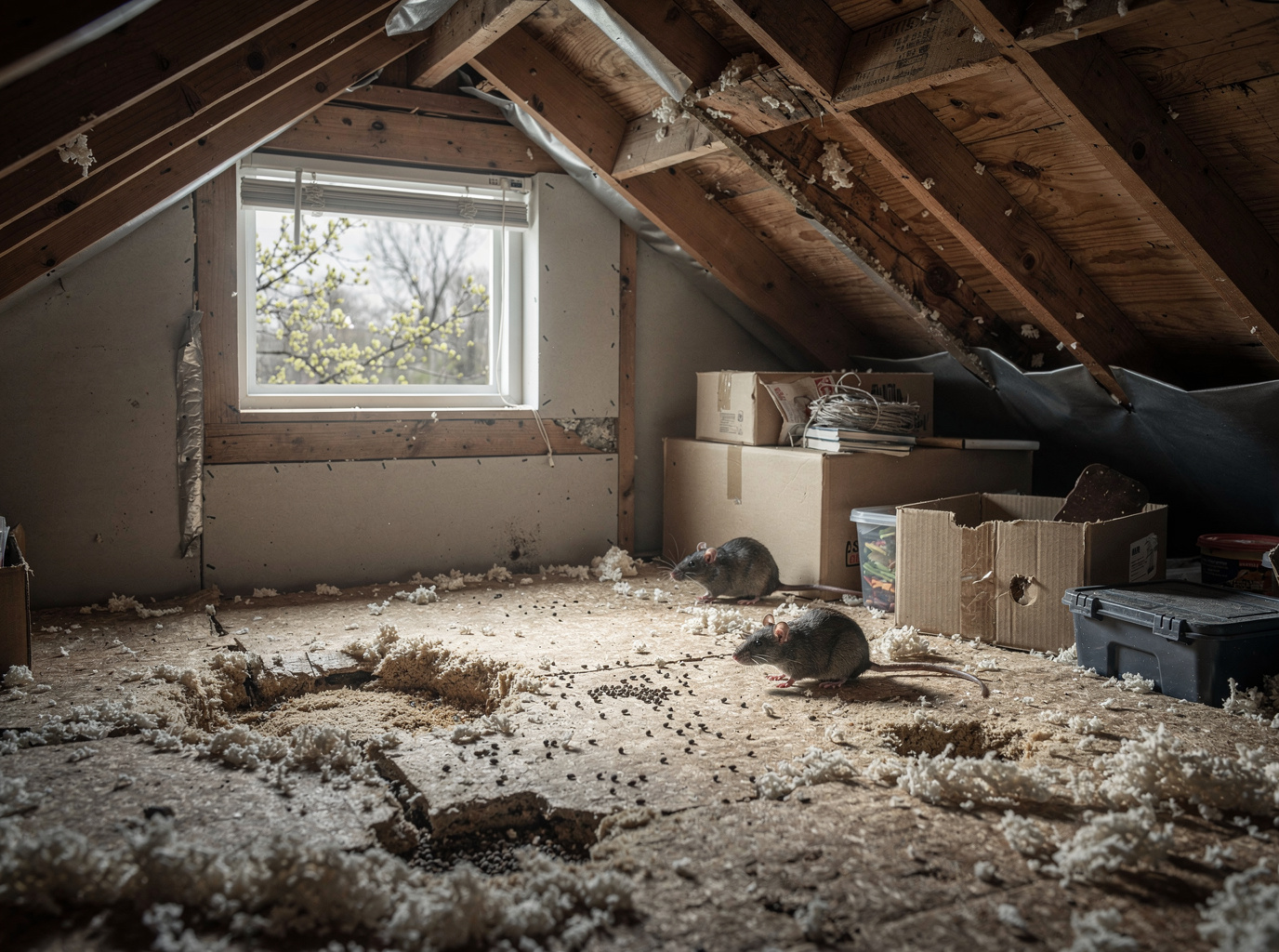
In early spring across Spring, Texas, attics become prime targets for roof rats and mice because warming daytime temperatures in the humid subtropical climate signal rodents to leave outdoor nests while nights remain cool enough to drive them indoors for stable shelter. Homes in older sections of Old Town Spring and Spring Creek Oaks often have rooflines and vents that provide easy access once rodents follow utility lines from nearby green spaces.
Temperature and Seasonal Shifts in Harris County
Harris County experiences a humid subtropical pattern where early spring brings daytime highs climbing into the 70s after winter lows. This change prompts roof rats to abandon outdoor burrows along Spring Creek Greenway and seek the consistent warmth of attics. Homes built decades ago in Old Town Spring Historic District frequently lack modern sealing around soffits and ridge vents, allowing rodents to enter during the first warm spells. The pattern repeats yearly as rodents follow established travel routes from wooded edges into residential attics before summer humidity peaks.
Local Housing Stock and Entry Routes
Many homes in Imperial Oaks and Spring Creek Oaks feature older roof construction with gaps around plumbing vents and chimney flashing that rodents exploit in early spring. These properties sit near drainage areas that hold moisture year-round, supporting rodent populations that expand as food sources become available. Residents notice activity first in attics because insulation provides nesting material and the space stays dry compared to crawl spaces. Checking for droppings along rafters reveals travel paths that typically start at roof edges and move inward within days of warmer weather arriving.
Influence of Nearby Waterways and Terrain
Spring Creek Greenway and surrounding drainage provide consistent water sources that sustain roof rat colonies through winter. In early spring, rising water levels push rodents toward higher ground and into nearby attics in neighborhoods like Timber Lane and Cypresswood. The flat terrain of Harris County means rodents travel along fences and utility lines directly from green spaces into residential blocks. This movement increases when spring rains saturate soil, making outdoor burrows less stable than protected attic spaces above garages and living areas.
Inspection and Exclusion Focus Areas
A thorough rodent inspection identifies gaps at roofline intersections and around HVAC lines that open during early spring temperature swings. Rodent exclusion work targets these points with steel mesh and sealant sized for local roof rat dimensions. Properties near The Woodlands and Conroe share similar roof rat pressure because the same greenway corridors extend northward. Homeowners in Champion Forest often see activity first in second-story attics because mature trees provide direct access routes from branches to eaves.
Next Steps for Spring Homeowners
Readers can review why roof rats get into attics in Spring TX for detailed entry mapping and follow up with attic rat removal when signs appear. Another useful resource covers how rodents enter through rooflines, vents & utility gaps. Addressing these points before summer humidity arrives reduces the chance of repeated visits from the same colonies moving between Imperial Oaks and adjacent blocks.