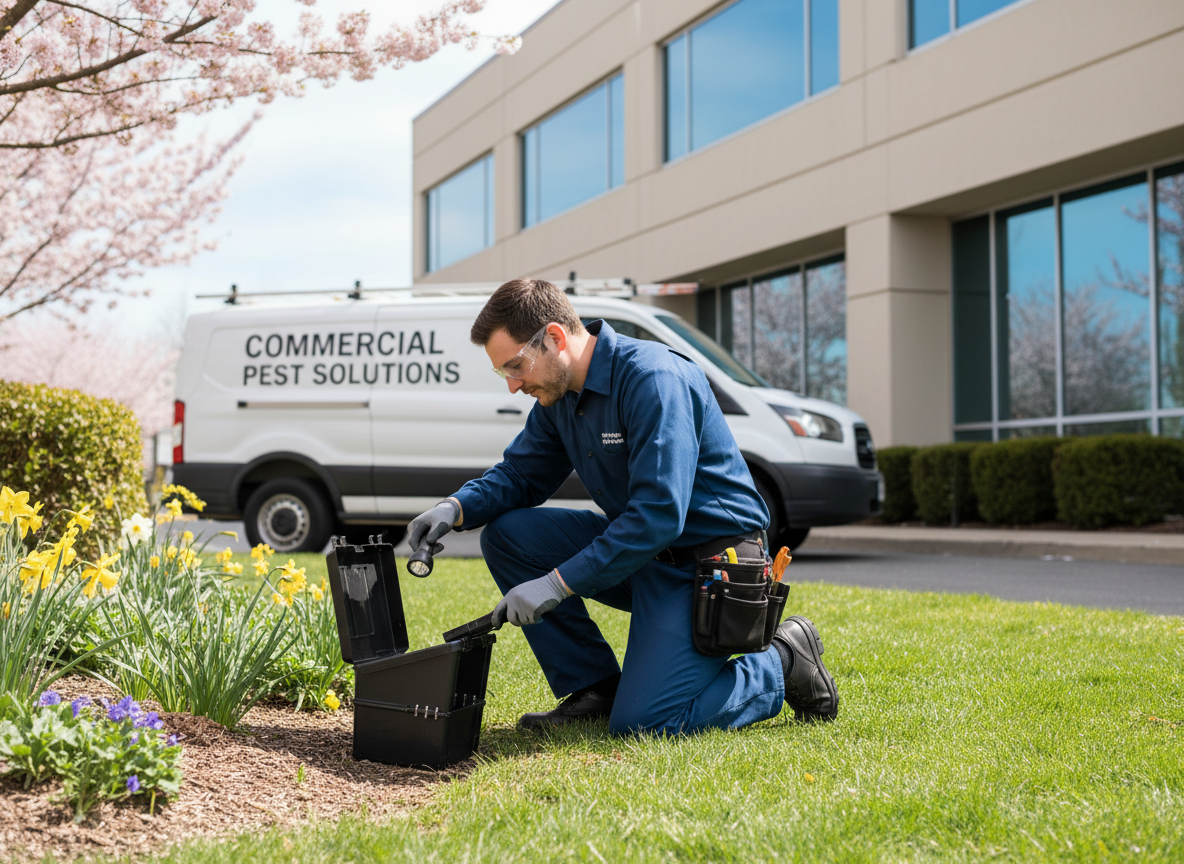
Commercial properties in Spring often sit near Spring Creek Greenway and the Old Town Spring Historic District, where dense vegetation and aging structures create constant entry points. Humid subtropical summers drive rodents indoors seeking moisture and shelter, especially in warehouses and restaurants along the Houston-Conroe corridor. Effective control starts with identifying how roof lines, loading docks and utility penetrations in Harris County buildings allow roof rats and Norway rats to move between units.
Exclusion work must account for the clay-heavy soils and frequent summer storms that erode sealants around foundations in neighborhoods like Spring Creek Oaks. Technicians use heavy-gauge metal mesh and concrete patching rather than foam alone because rodents quickly chew through lighter materials in these conditions. Food-service clients also require coordination with health-department guidelines that prohibit certain bait placements near prep areas.
Ongoing monitoring programs for office parks and retail centers in Imperial Oaks focus on quarterly inspections of drop ceilings and HVAC chases, where droppings frequently accumulate unnoticed. Technicians document activity with dated photos and adjust trap placement based on seasonal migration patterns that intensify after heavy rains. This approach prevents the rapid re-infestation common when only trapping is performed without addressing the building envelope.
Technician insight
In Spring the thing that catches most people out with Commercial Rodent Control is how quickly roof rats move from the Spring Creek Greenway into drop ceilings of older retail buildings once summer humidity spikes. The clay soils here shift with every storm, reopening gaps around foundations that foam alone never holds. We always start by checking the roofline and utility chases first because that is where the real access happens.
Imperial Oaks Retail Strip
Rats were entering a row of shops through unsealed HVAC penetrations after heavy rains. Inspection found heavy droppings in shared ceiling voids connected to the greenway edge. We installed metal collars on all penetrations and placed targeted stations, then set a quarterly check schedule that stopped new activity within two visits.
Commercial Rodent Control Services We Offer
✓Restaurant Rodent Control
Focused trapping and exclusion for kitchens and storage areas near Old Town Spring, preventing health-code violations from roof rat activity in humid summers.
✓Warehouse Exclusion Sealing
Heavy-duty sealing of dock doors and utility entries in industrial buildings throughout Harris County to block Norway rat entry driven by nearby creek corridors.
✓Retail Store Monitoring Programs
Quarterly inspections and trap checks for strip centers in Imperial Oaks that experience seasonal surges after summer storms push rodents from green spaces.
✓Office Building Drop-Ceiling Service
Targeted removal and sanitation of rodent harborage inside suspended ceilings common in Spring office parks serving The Woodlands commuters.
✓Multi-Tenant Complex Treatment
Coordinated control across connected commercial units in Spring Creek Oaks to stop rats from moving between suites through shared wall voids.
Commercial Rodent Control Cost in Spring, TX
| Service | Typical Range | What Affects It |
|---|---|---|
| Initial Commercial Inspection | $250–$450 | Larger warehouses or multi-tenant sites increase time required |
| Exclusion Sealing Package | $600–$1,800 | Depends on number of dock doors and roof penetrations |
| Monthly Monitoring Program | $175–$350 | Per visit; frequency adjusted for seasonal pressure near greenways |
| Emergency Follow-Up Visit | $200–$375 | Triggered by new activity reports between scheduled services |
Ranges are typical for Spring, TX and confirmed with an exact written quote before any work starts.
How it works
- 1
Site Assessment
Technicians inspect exterior perimeters, loading areas and interior voids at the Spring address, noting entry points created by local terrain and building age.
- 2
Exclusion Work
Install metal barriers and seal utility penetrations using materials suited to humid subtropical expansion and contraction cycles.
- 3
Population Reduction
Place tamper-resistant stations and traps in high-activity zones identified during the initial walk-through, avoiding food-prep surfaces.
- 4
Follow-Up Monitoring
Return visits document activity levels and adjust placements based on seasonal movement patterns observed in Harris County commercial sites.
Pricing
Quotes based on square footage, number of units and current activity level; initial commercial visits typically start higher than residential.