2026-09-16 · David Ellis
Scratching Noises in Walls at Night: Rats or Mice?
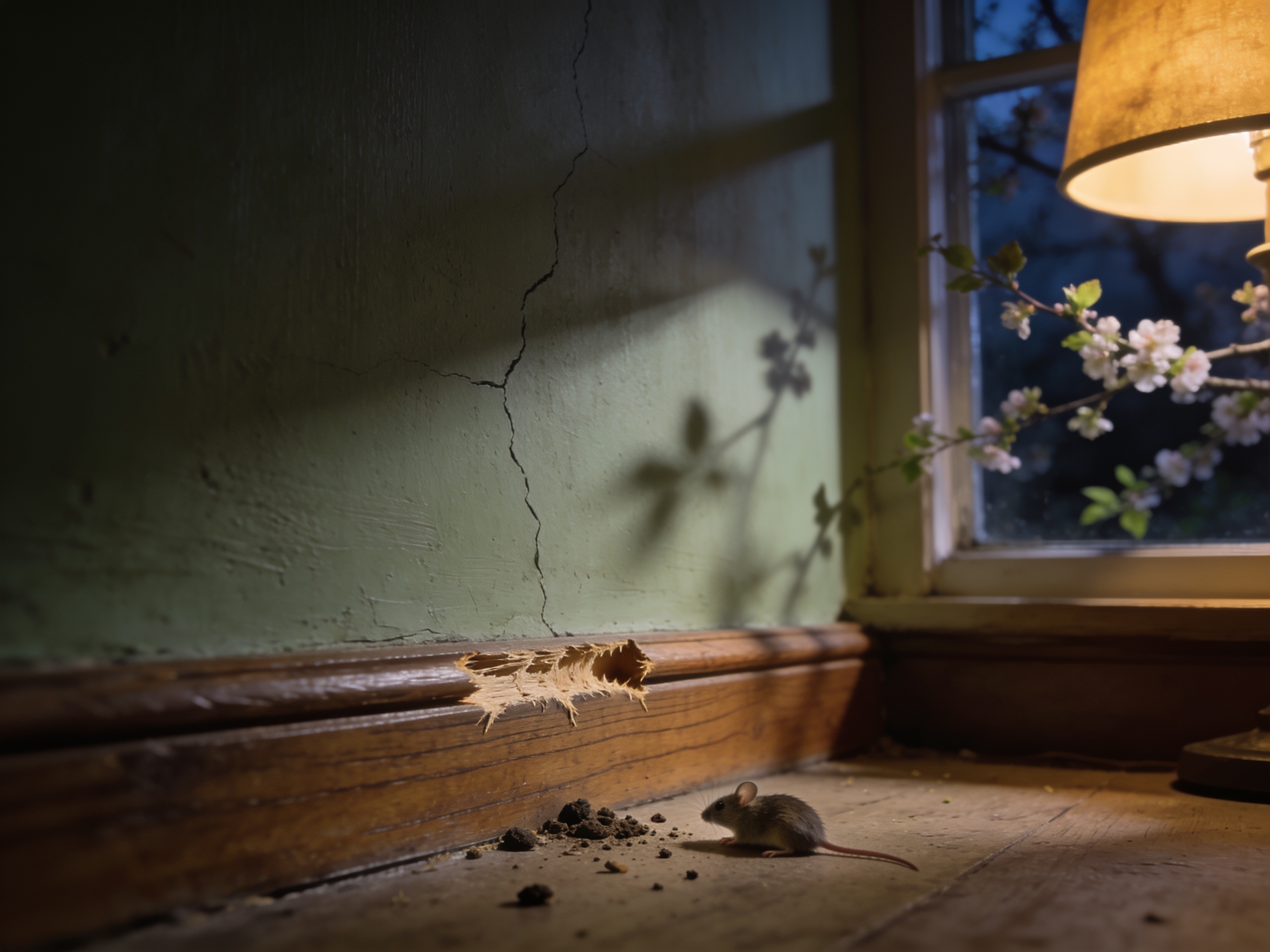
Scratching noises in walls at night in Spring, Texas homes are most often caused by roof rats rather than mice. Roof rats measure 6 to 8 inches in body length and produce louder, more persistent scratching as they travel through wall voids, while house mice stay under 4 inches and create lighter, higher-pitched sounds that are harder to hear from outside the wall. In Harris County neighborhoods such as Old Town Spring and Imperial Oaks, the hot humid summers drive rodents indoors for consistent moisture and shelter, increasing the chance that the noise comes from rats nesting in attics or between studs.
Distinguishing Rat and Mouse Activity by Sound and Signs
Roof rats produce scratching that lasts longer and occurs in bursts as they move along pipes or wiring, often accompanied by gnawing sounds on wood or insulation. Mice tend to scurry in shorter, quicker patterns and leave behind smaller droppings the size of rice grains. Homeowners in Spring Creek Oaks frequently report hearing activity near kitchen walls where roof rats seek out pet food or fallen crumbs. Check for greasy rub marks along baseboards or utility lines, which rats create more prominently due to their larger size. These physical traces help confirm whether the nocturnal sounds come from the bigger rodents common in the region's humid climate.
Why Roof Rats Dominate in Local Housing Stock
Older homes in the Old Town Spring Historic District and around Spring Creek Greenway often feature gaps around rooflines and vents that allow roof rats easy access, especially during humid summers when outdoor food sources fluctuate. The proximity to Houston, The Woodlands, and Conroe means many properties sit near wooded edges or drainage areas that support rat populations year-round. Mice appear more in newer builds with tighter construction, but the combination of mature trees and frequent rainfall in Harris County favors the climbing habits of roof rats. Residents notice the difference most clearly in attics where insulation shows larger nesting areas from rats.
Practical Steps After Hearing the Noises
Begin by placing a few snap traps or monitoring stations along suspected wall runs to capture evidence of size and species. Avoid sealing entry points immediately, as trapped rodents inside walls can cause additional odor issues. Inspect utility penetrations and soffits during daylight hours when activity is lower. For homes in Imperial Oaks or nearby areas, focus checks on areas where branches touch the roof, a common access route. Document the timing and location of sounds to share with a professional who understands local conditions.
When to Consider Professional Inspection
If scratching continues for more than a few nights or droppings appear in multiple rooms, schedule a rodent inspection to map activity without guesswork. Technicians familiar with Spring properties can identify whether rats or mice are present and recommend targeted rat removal & control or mice services. See our guide on why roof rats get into attics in Spring TX for details on common roof entry points in this climate. Early identification prevents larger infestations that affect insulation and wiring in older Harris County homes.